

NAD+ Anti-Aging Skin: What Science Says for Women 40+

Written by Marcus W.
Published September 11, 2026

If you've noticed your skin feels thinner, drier, or slower to bounce back after 40, you're not imagining it. NAD+ anti-aging skin support has become one of the most talked-about topics in longevity science — and for good reason. NAD+ (nicotinamide adenine dinucleotide) is a coenzyme found in every cell of your body, and its natural decline is now considered a key driver of how our skin ages. For women over 40, understanding this molecule may be the missing piece in your anti-aging routine.

This isn't just wishful thinking or another trendy buzzword. Peer-reviewed research has connected NAD+ levels to DNA repair, mitochondrial energy, and the skin's ability to defend itself against environmental stress. In this article, we'll break down exactly what the science says — and what it doesn't — so you can make an informed, empowered decision about your skin health.
What Is NAD+ and Why Does It Decline After 40?
NAD+ is a coenzyme your cells rely on to convert nutrients into usable energy. It also powers a family of proteins called sirtuins and repair enzymes known as PARPs, both of which are essential for maintaining healthy, resilient tissue — including your skin.
Here's the catch: research shows that NAD+ levels drop significantly with age. Studies estimate that by midlife, we may have roughly half the NAD+ we had in our twenties. This decline accelerates the cellular processes we associate with visible aging — reduced repair capacity, slower cell turnover, and increased oxidative stress.
For women, hormonal changes during perimenopause and menopause compound this decline. Falling estrogen levels reduce collagen production and skin thickness, while diminishing NAD+ leaves cells with less energy to repair daily damage. It's a double impact that helps explain why so many women notice a rapid shift in their skin's appearance in their forties.
The Science: How NAD+ May Support Anti-Aging Skin
Let's look at what the research actually demonstrates about NAD+ anti-aging skin benefits. While much of the work is still emerging, several mechanisms are well-documented in scientific literature.
1. DNA Repair and UV Defense
Sunlight is the single biggest external driver of skin aging. UV exposure damages DNA, and your cells need NAD+ to fuel the repair enzymes that fix that damage. When NAD+ is abundant, cells can respond efficiently. When it's depleted, damage accumulates — contributing to fine lines, pigmentation, and loss of elasticity.
2. Mitochondrial Energy and Cell Turnover
Healthy skin depends on a steady cycle of shedding old cells and generating new ones. This turnover is energy-intensive, and mitochondria — your cells' power plants — require NAD+ to function. Restoring NAD+ may help support the cellular energy needed for a brighter, more even complexion.
3. Sirtuin Activation and Inflammation Control
Sirtuins are often called longevity proteins because they help regulate cellular stress responses and reduce chronic, low-grade inflammation (sometimes nicknamed "inflammaging"). Since sirtuins depend on NAD+ to work, maintaining healthy levels may help calm the inflammatory processes that accelerate aging skin.
“NAD+ sits at the intersection of energy metabolism and cellular repair — two systems that are absolutely central to how skin ages.”
Curious About NAD+ Therapy?
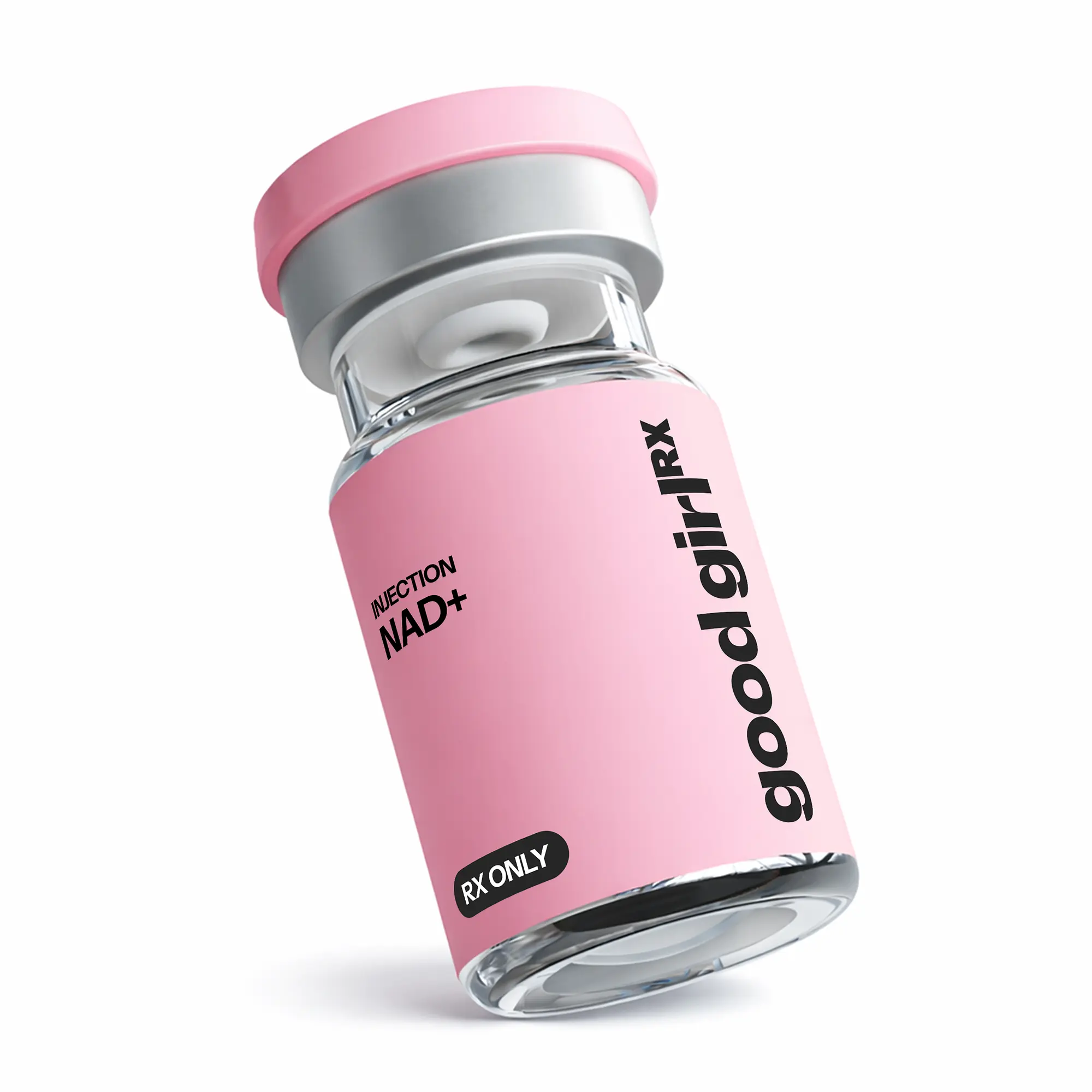
See if physician-guided NAD+ support fits your anti-aging goals. Start your confidential online visit with Good Girl Rx today.
Explore NAD+ →NAD+ vs. Traditional Anti-Aging Approaches
Most anti-aging skincare works from the outside in — think retinoids, peptides, and sunscreen. These remain essential. But NAD+ therapy takes a different, complementary approach by targeting the cellular machinery that keeps skin healthy from the inside out.
| Approach | How It Works | Primary Target |
|---|---|---|
| Topical retinoids | Boost surface cell turnover | Skin surface |
| Sunscreen (SPF) | Blocks UV damage | Prevention |
| Collagen support | Supplies building blocks | Structure |
| NAD+ therapy | Fuels cellular energy & repair | Whole-cell health |
The most effective anti-aging strategies are rarely about one product. They combine protection, topical support, and internal cellular health. That's why many women view NAD+ therapy as a foundation layer that works alongside — not instead of — their existing routine.
- Protect first: Daily broad-spectrum SPF is non-negotiable for anti-aging
- Support turnover: Retinoids and gentle exfoliation encourage renewal
- Feed the cell: NAD+ therapy and antioxidants like glutathione target cellular health
- Stay consistent: Skin responds to routine, not quick fixes
What to Expect From NAD+ for Skin Health
It's important to set realistic expectations. NAD+ is not a magic eraser for wrinkles, and no reputable provider will promise instant transformation. Instead, think of it as supporting the underlying cellular systems that keep skin healthy over time.
Some women pursuing broader wellness goals also explore complementary options like B12 injections for energy or glutathione as a master antioxidant. A licensed provider can help you understand which approach — if any — makes sense for your unique health profile and goals.
As with any therapy, individual responses vary. Factors like genetics, baseline health, lifestyle, and consistency all influence outcomes. The best results come from a personalized plan developed with your provider, not a one-size-fits-all promise.
Is NAD+ Right for You?
If you're a woman over 40 looking to support your skin at the cellular level — and you value science-backed, medically guided care — NAD+ therapy may be worth discussing. It reflects a growing shift in anti-aging: moving beyond surface treatments toward supporting the biology that keeps us vibrant.
The most empowering thing you can do is get personalized guidance. A licensed provider can review your health history, discuss your goals, and help you decide whether NAD+ anti-aging skin support belongs in your regimen.
“Aging well isn't about chasing youth — it's about giving your cells what they need to thrive at every age.”
Ready to Support Your Skin From Within?
Start your online visit and connect with a licensed provider to see if NAD+ therapy is right for your anti-aging journey.
Explore NAD+ →Share this article

Ready to start your journey?
Complete your free online visit and see if GLP-1 treatment is right for you.
Get Started